
Tools · Budget Allocation
Everything can't be
high priority.
Budget Allocation is a prioritization method where every stakeholder gets a fixed budget — 100 points, say — to spend across the features on the table. Lincah runs the whole round live in the browser: private spending, simultaneous reveal, and a summed total that shows what the room actually wants.
Participants join with a display name and a 6-character code — no account required.
Same budget for everyone. Where they spend it is the priority list.
Roadmap review, without a real budget
Alex · Staff Engineer
Sam · Backend
Riko · Frontend
Mei · QA
A list where everything is priority number one has no priority order at all.
Why it exists
Scarcity forces the trade-off talk out loud.
Stakeholders are given a fixed "budget" — 100 points, or $100 — to distribute across the features or initiatives on the table. It forces them to make hard trade-offs. Instead of saying "everything is high priority," they have to allocate scarce resources — which reveals their true preferences.
There is no way to spend 100 points on every item. The moment the budget runs out is the moment the real priorities show up.
The ritual
One budget, spent once, summed together.
The mechanics are simple and strict — the budget is fixed and the reveal is simultaneous. Try a round on the table to the right; it behaves like the real thing.
- 01
List the contenders
The facilitator lists every feature or initiative under consideration — clear enough that nobody is voting on a guess.
- 02
Set the budget
Every participant is handed the same fixed budget — usually 100 points, sometimes a dollar figure. Nobody gets more say than anyone else.
- 03
Spend in private
Each person distributes their budget across the items they actually want funded. Allocations stay hidden until everyone has spent.
- 04
Reveal every split
All distributions surface at once. No one edits after seeing where the rest of the room put their money.
- 05
Sum the totals
Add every participant’s allocation per item. The ranking that falls out is the room’s real priority order — not the loudest opinion in it.
- 06
Interrogate the outliers
An item that ate 40%+ of the budget, or one that got nothing from a stakeholder who usually champions it, both deserve a conversation before the roadmap locks.
A scripted round — the real one syncs live across every device in the room.
In the room
Three screens. One reveal.
The facilitator lists the items and drives the round, participants spend from their own budget in private, and the projector shows every distribution land at once.
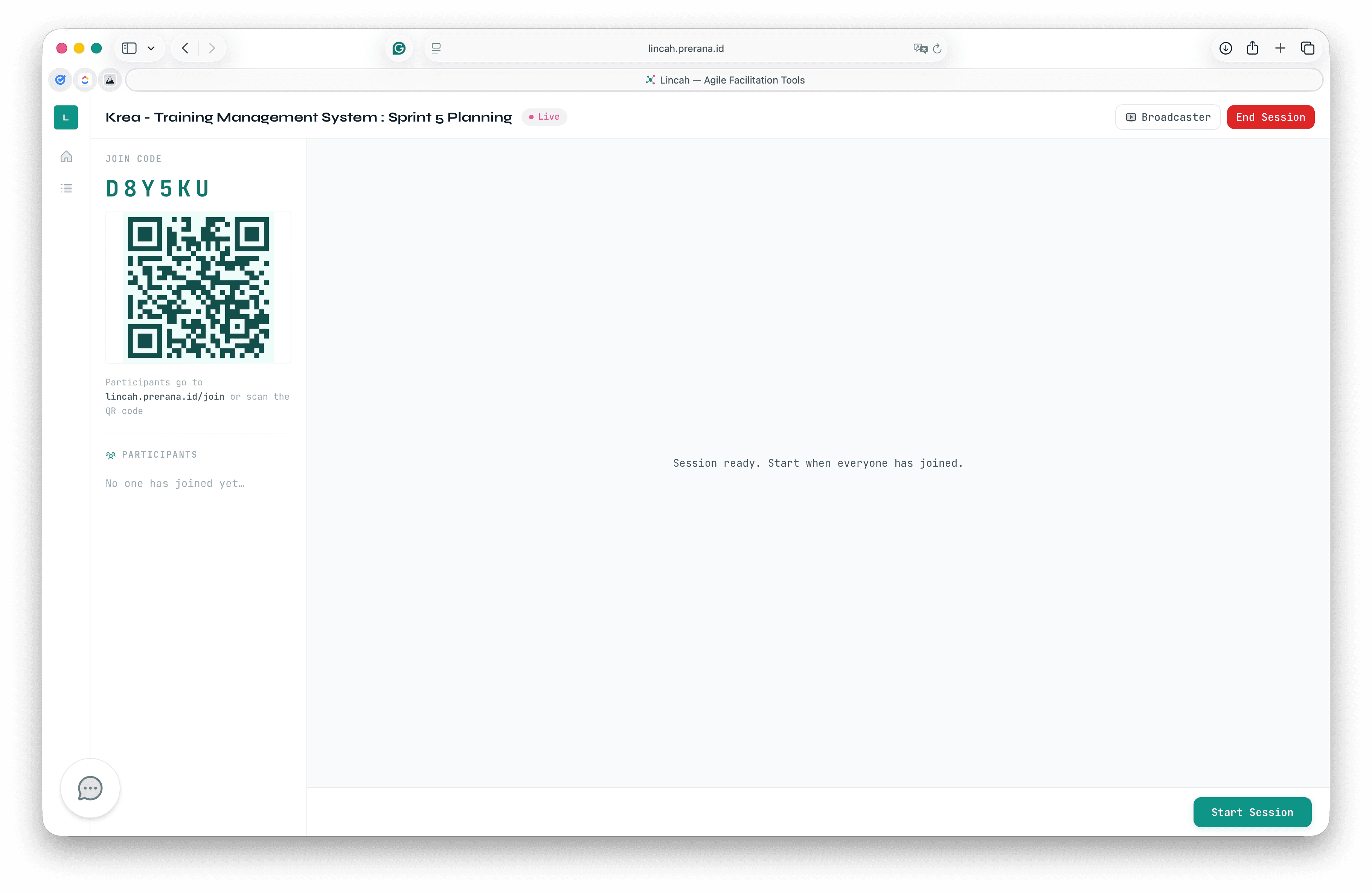
Facilitator
You set the budget and the list.
Queue up the features, watch allocations land in real time, and trigger the reveal the moment everyone has spent.
Participant
They just spend from their purse.
A display name and a 6-character code. No account, no install — allocations stay hidden until everyone has spent.
Your budget · 34 left
Illustrative mockup — not a product screenshot
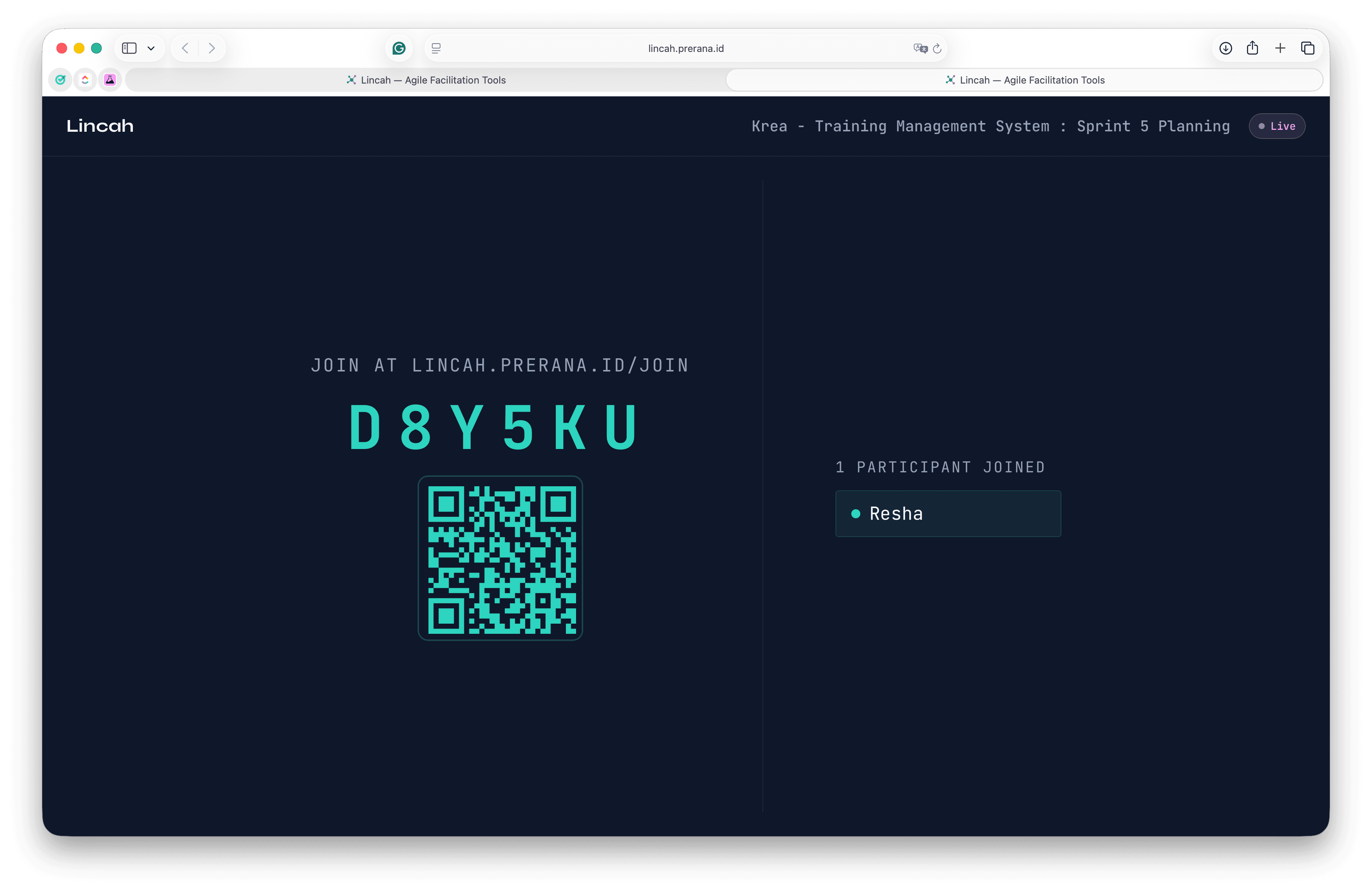
Broadcaster
The totals, on the wall.
A read-only view built for the projector, so the summed priorities land in front of the whole room at once.
The spec
When to open the budget.
- When
- Prioritizing a product roadmap, choosing between large initiatives, or allocating quarterly budgets.
- Who
- Product Managers, key stakeholders, and sponsors — anyone with a real stake in what gets funded.
- Budget
- A fixed pool per participant — commonly 100 points or $100. Everyone spends from the same size purse.
- Threshold
- An item over 40% of the total budget gets flagged automatically for discussion before it dominates.
- Joining
- Participants enter a display name and a 6-character code. No account, no install.
- Plans
- Free and Pro plans available.
Table talk
Field notes from facilitators.
The tool runs the mechanics. These four habits are what make the totals worth acting on.
Brief the room before the budget opens.
Walk through what each item actually means before anyone spends a point. Vague items get arbitrary allocations that reflect confusion, not preference.
Flag anything past 40%.
If a single item absorbs more than 40% of the total budget, stop and discuss it — it may need to be scoped or split before it dominates the roadmap.
Run it anonymous, every time.
Stakeholders allocate very differently when they can see what others are doing. Anonymity is what makes the reveal mean something.
Read the zeros, not just the totals.
After reveal, compare individual distributions. A participant who put nothing toward an item the rest of the room loves often has critical context about feasibility or risk.
Open the budget.
Free and Pro plans. Your team joins with a display name and a 6-character code — nothing to install, no accounts for participants, and the reveal lands all at once.