
Tools · Crazy 8s
One idea.
No time to second-guess it.
Crazy 8s is a time-boxed rapid ideation technique: one idea per round, up to 8 rounds, with instant dot-voting after every reveal. Lincah runs the whole clock live in the browser — the round timer, the reveal, the 15-second vote — so the team never gets a chance to filter before generating.
Participants join with a display name and a 6-character code — no account required.
Eight rounds, eight prompts. Each one compounds on the last.
Brainstorm, without Crazy 8s
Alex · Staff Engineer
Sam · Backend
Riko · Frontend
Mei · QA
The first idea spoken becomes the room's ceiling, not its floor.
Why it exists
Quantity is the only way past the safe idea.
Teams default to safe thinking under normal meeting conditions — people self-censor, anchor on the first idea, and filter before generating. Crazy 8s forces quantity over quality, breaks creative blocks, and ensures every voice contributes equally.
There is no time inside a round to second-guess an idea before it goes down — which is exactly what gets the interesting ones onto the board.
The ritual
One prompt, one clock, one round.
The mechanics are simple and unforgiving — the clock never waits. Try two rounds on the panel to the right; it behaves like the real thing.
- 01
Set the problem
The facilitator writes one problem statement, plus an optional prompt for each round.
- 02
Start the clock
A fixed time window opens. Every participant has exactly one idea to contribute — no more, no less.
- 03
Type it, don’t defend it
Raw and half-baked is fine. There is no room in the round for explaining or negotiating an idea.
- 04
Reveal, then dot-vote
Ideas flip into view together. Everyone gets 15 seconds and 3 dots to spend on whatever stands out.
- 05
Surface the leaders
The top 2 ideas by dot count are pulled out at the end of the round as a discussion signal.
- 06
Repeat, up to 8 rounds
A new prompt opens the next round. Ideas compound — round 6 builds on what round 2 unlocked.
A scripted round — the real one syncs live across every device in the room.
In the room
Three screens. One clock.
The facilitator sets the pace, participants race the timer on whatever device is in their hand, and the projector keeps the whole room honest about how many rounds are left.
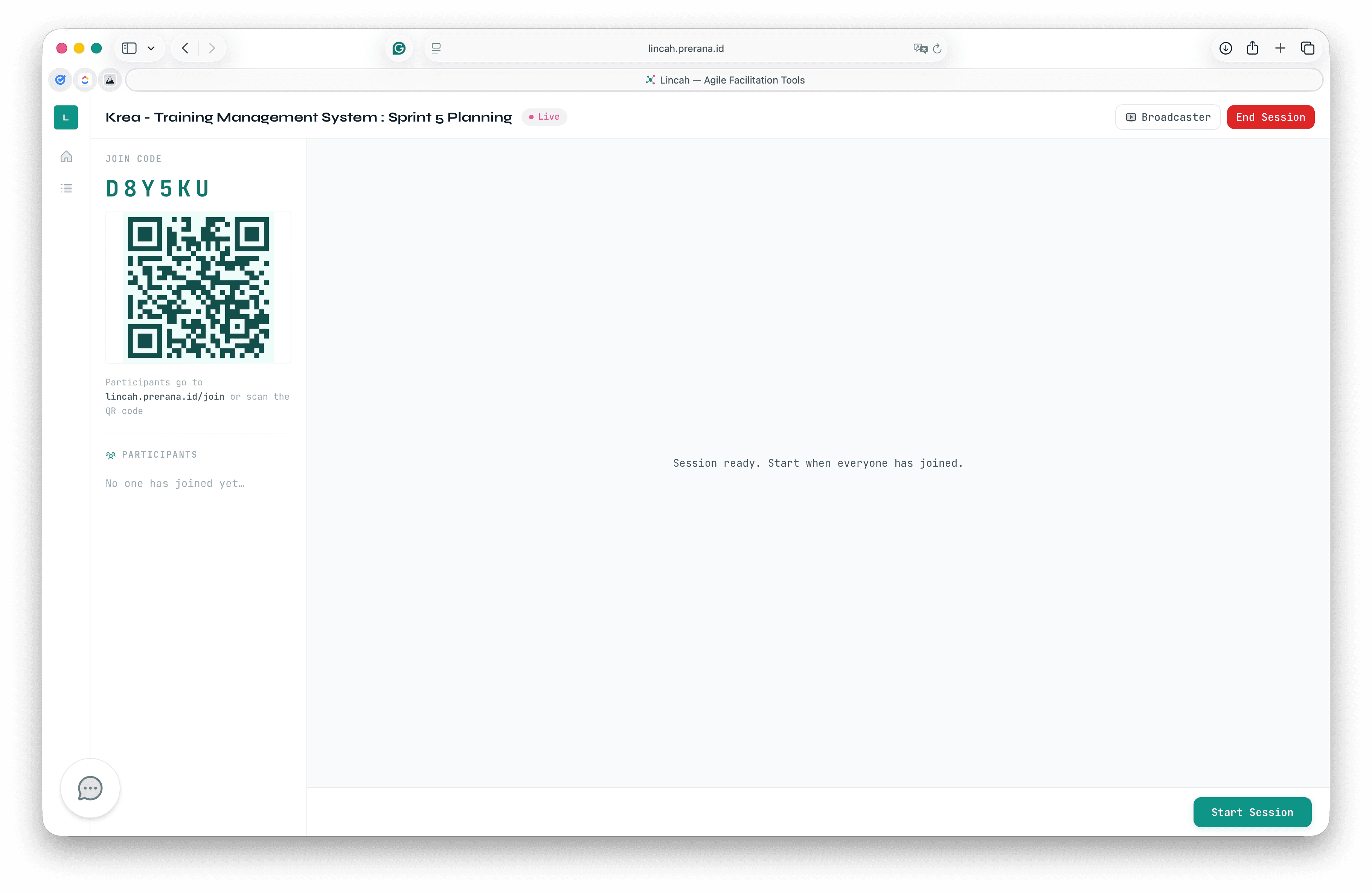
Facilitator
You set the prompt and start the clock.
Queue the problem statement and round prompts, watch ideas land in real time, and open the vote the instant the timer hits zero.
Participant
One box, one idea, one clock.
A display name and a 6-character code. No account, no install — it works on the phone already in their hand.
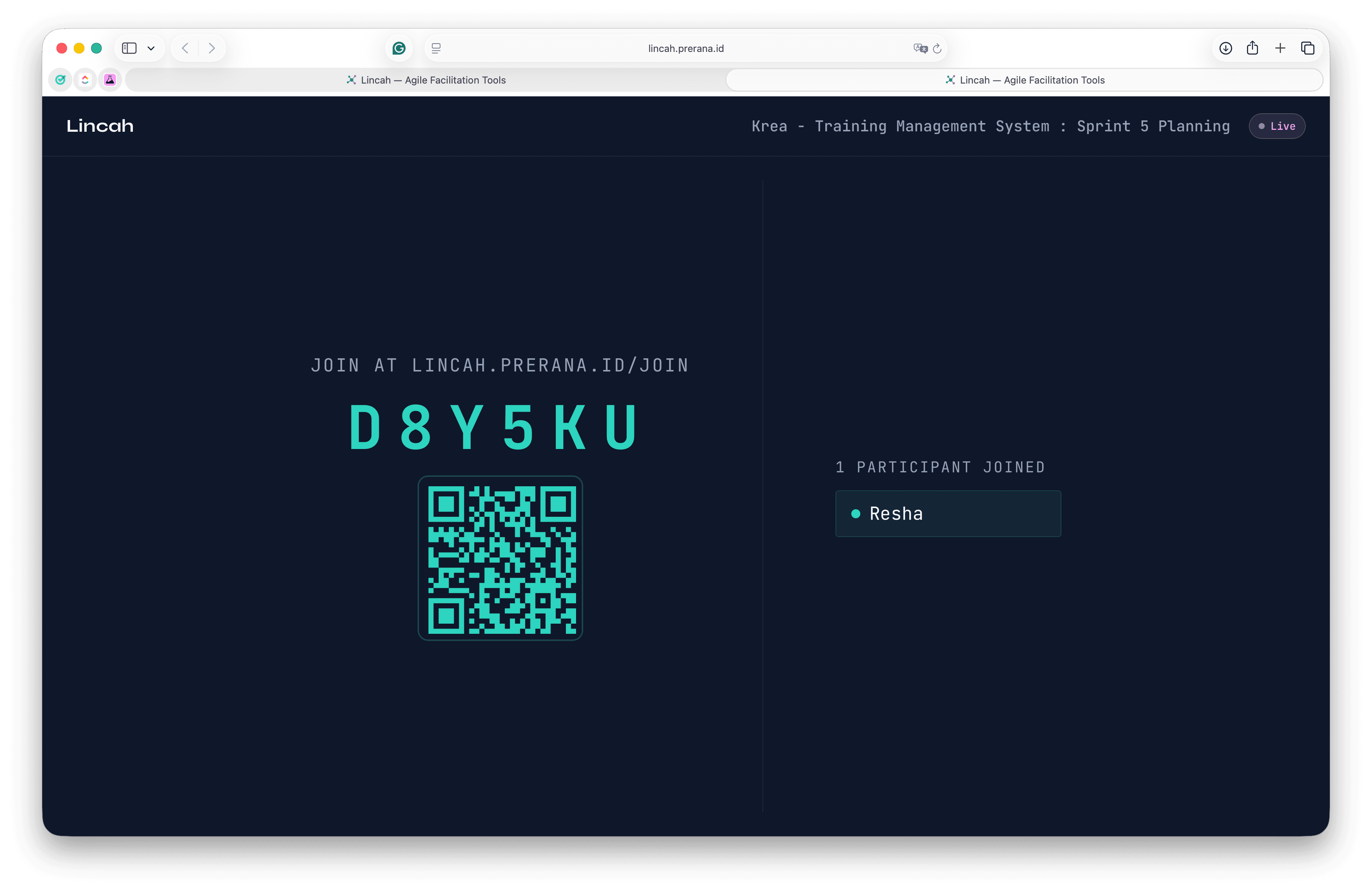
Broadcaster
The countdown, on the wall.
A read-only view built for the projector, so nobody can claim they didn't see the clock running out.
The spec
When to run the clock.
- Format
- Up to 8 time-boxed rounds. One raw idea per participant per round, followed by immediate dot-voting.
- Voting
- 15 seconds and 3 dots per participant, spent on the ideas revealed that round.
- When
- Discovery workshops, innovation sessions, design sprints, or any problem-solving meeting stuck in conventional thinking.
- Who
- Product Managers, Designers, Business Analysts, and Scrum Masters facilitating requirement elicitation — or any cross-functional team on an open-ended problem.
- Joining
- Participants enter a display name and a 6-character code. No account, no install.
- Plans
- Free and Pro plans available.
Round-by-round
Up to 8 rounds per session — the facilitator can stop early once the board has what it needs.
Table talk
Field notes from facilitators.
The tool runs the clock. These four habits are what keep the ideas honest.
Don’t explain. Don’t defend.
Resist the urge to explain or defend ideas during rounds. Raw, even half-baked ideas are the point — editing happens later, not mid-round.
Use the prompts on purpose.
“What if budget was unlimited?” “What would a competitor do?” “Most radical idea possible.” Constraints like these unlock creativity that an open-ended prompt never will.
A dot is a signal, not a decision.
The round 3 underdog that got one vote might be the most innovative idea in the room. Use the final summary as a conversation starter, not a final ranking.
Cameras off, for remote rounds.
Encourage remote participants to turn off cameras during idea generation. It minimizes social pressure and keeps people from anchoring on someone else’s reaction.
Start the first round.
Free and Pro plans. Your team joins with a display name and a 6-character code — nothing to install, no accounts for participants, and the clock starts the moment you say go.