
Tools · Pairwise Comparison
Never rank ten things
— pick between two, ten times.
Pairwise Comparison is a mathematical approach to ranking where every item is compared against every other item in a series of head-to-head matchups. Humans are bad at sorting a long list at once — but very good at choosing between two distinct options. Lincah runs the full round-robin live and tallies the wins into a strict 1-to-N list.
Participants join with a display name and a 6-character code — no account required.
Ten items is 45 pairs — the practical ceiling before focus slips.
Prioritization, without Pairwise Comparison
Rank eight items at once and the order shifts every time someone re-reads the list.
Why it exists
Nobody can hold ten things in their head at once.
Humans are generally bad at ranking a large list of items simultaneously, but very good at choosing between two distinct options. Ask someone to order a backlog of eight features top to bottom and you get a shrug and a guess.
Ask the same person “CSV export or dark mode” and the answer is instant. Pairwise Comparison breaks the impossible task into a series of easy ones, then lets the math rebuild the order from every answer.
The mechanic
One list in, one ranking out.
Every item faces every other item exactly once. Try a round-robin on the table to the right; it behaves like the real thing.
- 01
Load the list
The facilitator drops in the items to rank — features, bugs, risks, whatever needs an order.
- 02
Agree on the criterion
The room settles on one question before voting starts: more valuable? More urgent? Pick one.
- 03
Face two at a time
The system presents exactly one pair. Everyone sees only those two items — nothing else to weigh.
- 04
Choose, silently
Each participant picks the more important of the two, on their own device, without discussion.
- 05
Repeat every pair
The system cycles through every possible matchup until each item has faced every other item once.
- 06
Tally the wins
Wins are counted per item and the group gets a strictly ordered, 1-to-N ranked list — no ties to argue about.
A scripted round-robin — the real one syncs live across every device in the room.
In the room
Three screens. One ranking.
The facilitator loads the list and drives the matchups, participants vote pair by pair from their own device, and the projector holds the room's attention on the one decision in front of them.
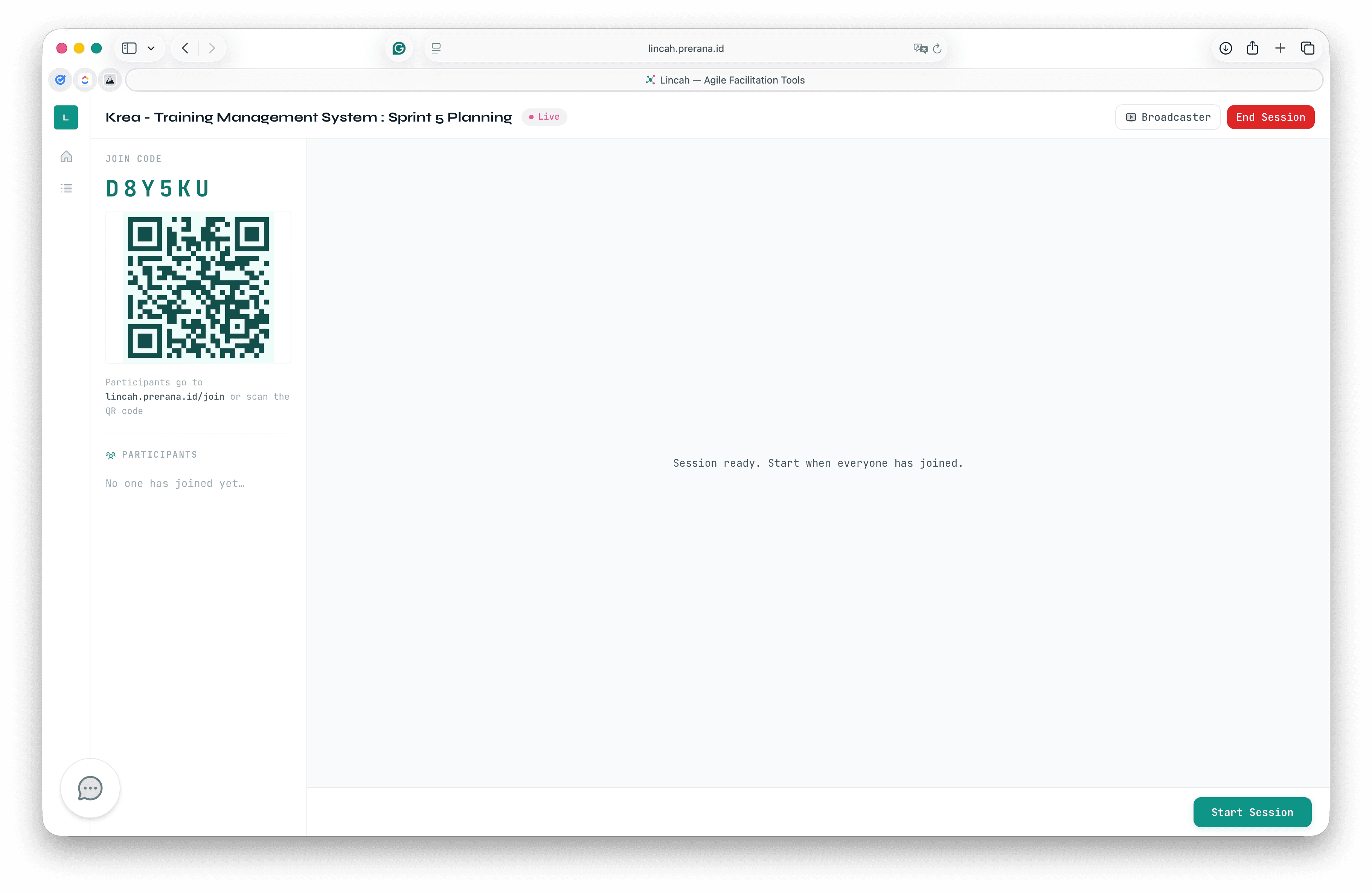
Facilitator
You load the list, they face the pairs.
Set the criterion, queue the item list, and step through every matchup while the room votes in real time.
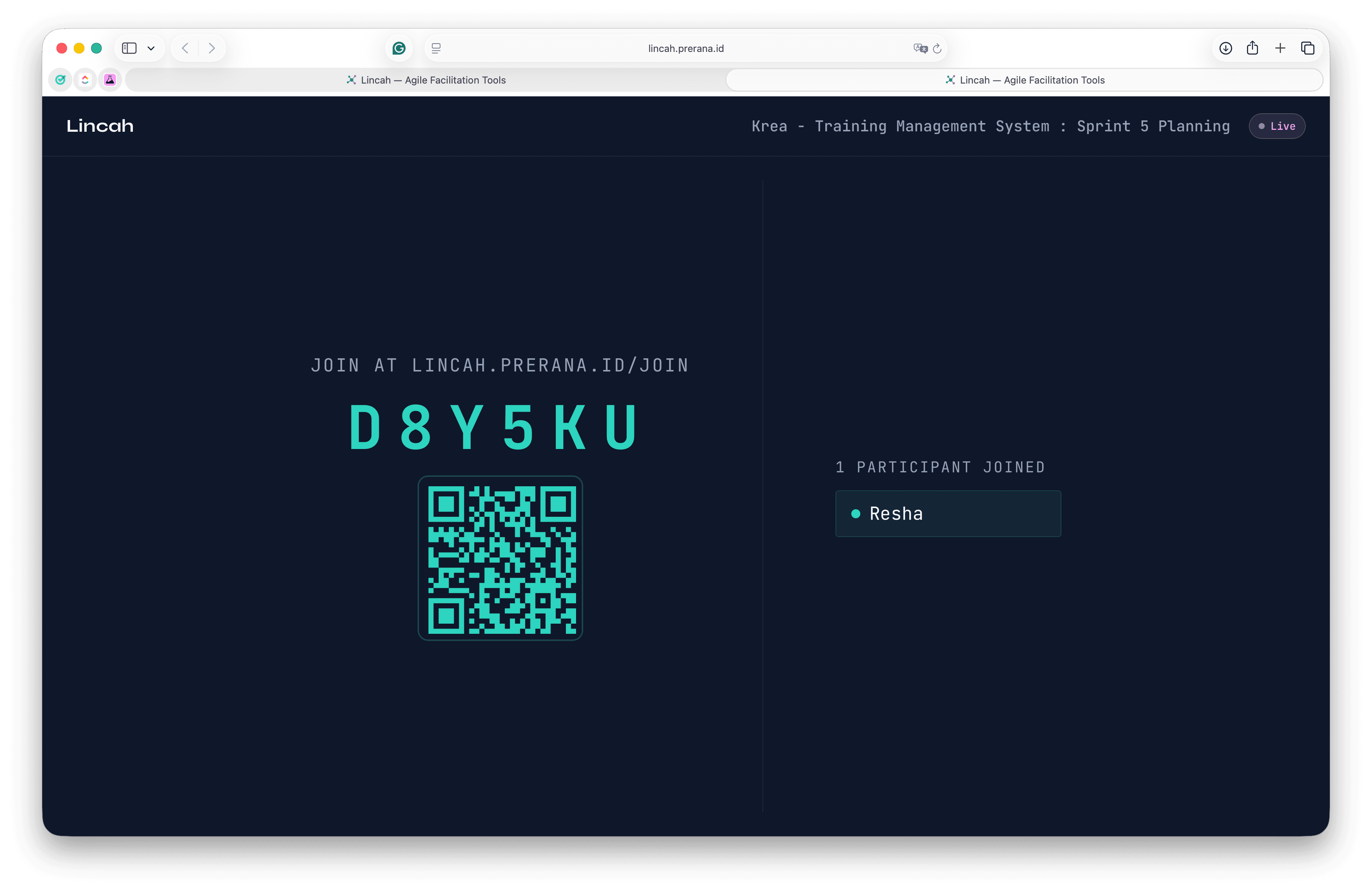
Broadcaster
The matchup, on the wall.
A read-only view built for the projector, so the whole room is looking at the same one pair at a time.
Participant
They just pick one of two.
A display name and a 6-character code. No account, no install — each phone shows exactly the pair being voted on, nothing else.
The spec
When to run the matchups.
- When
- When you have a long list of features or bugs and need a strictly ranked, 1-to-N list.
- Who
- Product Owners, Stakeholders, or the Development Team.
- Mechanic
- Every item is compared against every other item, one head-to-head matchup at a time.
- Item limit
- Keep it under 10 items — that is already 45 pairs to work through.
- Joining
- Participants enter a display name and a 6-character code. No account, no install.
- Plans
- Free and Pro plans available.
Pairs grow fast
10 items is already the practical ceiling — 45 pairs before participants lose focus.
Table talk
Field notes from facilitators.
The tool runs the matchups. These four habits are what make the ranking worth keeping.
Nail the criterion before round one.
"More valuable to users" and "more urgent" produce very different rankings from the same list. Agree on the comparison criterion before starting — inconsistent criteria produce a meaningless ranking.
Keep the list under 10 items.
Ten items means 45 pairs — the practical upper limit before participants lose focus. A backlog of 20 needs a pre-cut, not a longer session.
Vote silently, debate after.
Have participants vote without discussion; save it for after the full ranking is revealed. Mid-session debates derail the process and introduce anchoring.
Treat the output as strong input.
Items tied at the top may need a tiebreaker round or a quick group discussion to break the deadlock — the ranking is a starting point, not a final answer.
Stop arguing about the order.
Free and Pro plans. Your team joins with a display name and a 6-character code — nothing to install, no accounts for participants, and the ranking comes out of the votes, not the loudest voice.