
Tools · Planning Poker
Nobody speaks first.
Everyone reveals at once.
Planning Poker is a consensus-based, gamified technique for estimating the effort or relative size of development goals. Lincah runs the whole ritual live in the browser — private votes, simultaneous reveal, outlier debate, revote — with the one moment that matters kept intact.
Participants join with a display name and a 6-character code — no account required.
The usual deck: Fibonacci. The gaps get wider because uncertainty does.
Refinement, without Planning Poker
Alex · Staff Engineer
Sam · Backend
Riko · Frontend
Mei · QA
Every number after the first one is a negotiation, not an estimate.
Why it exists
The first number spoken owns the room.
Psychologists call it anchoring. Planning Poker exists to avoid the anchoring effect where the first person to speak influences everyone else. It ensures all team members have a voice and brings hidden assumptions to light.
Simultaneous reveal is the whole trick: nobody can lean on anyone else's number, so the disagreement you see is the disagreement that actually exists — which is exactly the conversation your team needed to have.
The ritual
One round, from deal to consensus.
The mechanics are simple and strict — every step protects the reveal. Try a round on the table to the right; it behaves like the real thing.
- 01
Deal the deck
Each team member gets a deck of cards with valid estimates — usually the Fibonacci sequence.
- 02
Describe the item
The Product Owner reads the story. Scope, acceptance criteria, open questions.
- 03
Discuss — briefly
The team talks through unknowns and assumptions. Numbers stay in pockets.
- 04
Vote in private
Everyone selects a card silently, on their own device. Nobody sees anything yet.
- 05
Reveal simultaneously
All cards flip at the same instant. The spread you see is the spread that actually exists.
- 06
Converge
Outliers explain their reasoning, the team discusses and revotes — until consensus is reached.
A scripted round — the real one syncs live across every device in the room.
In the room
Three screens. One reveal.
The facilitator drives, participants vote from whatever is in their hand, and the projector shows the flip to the whole room — all in sync, all in real time.
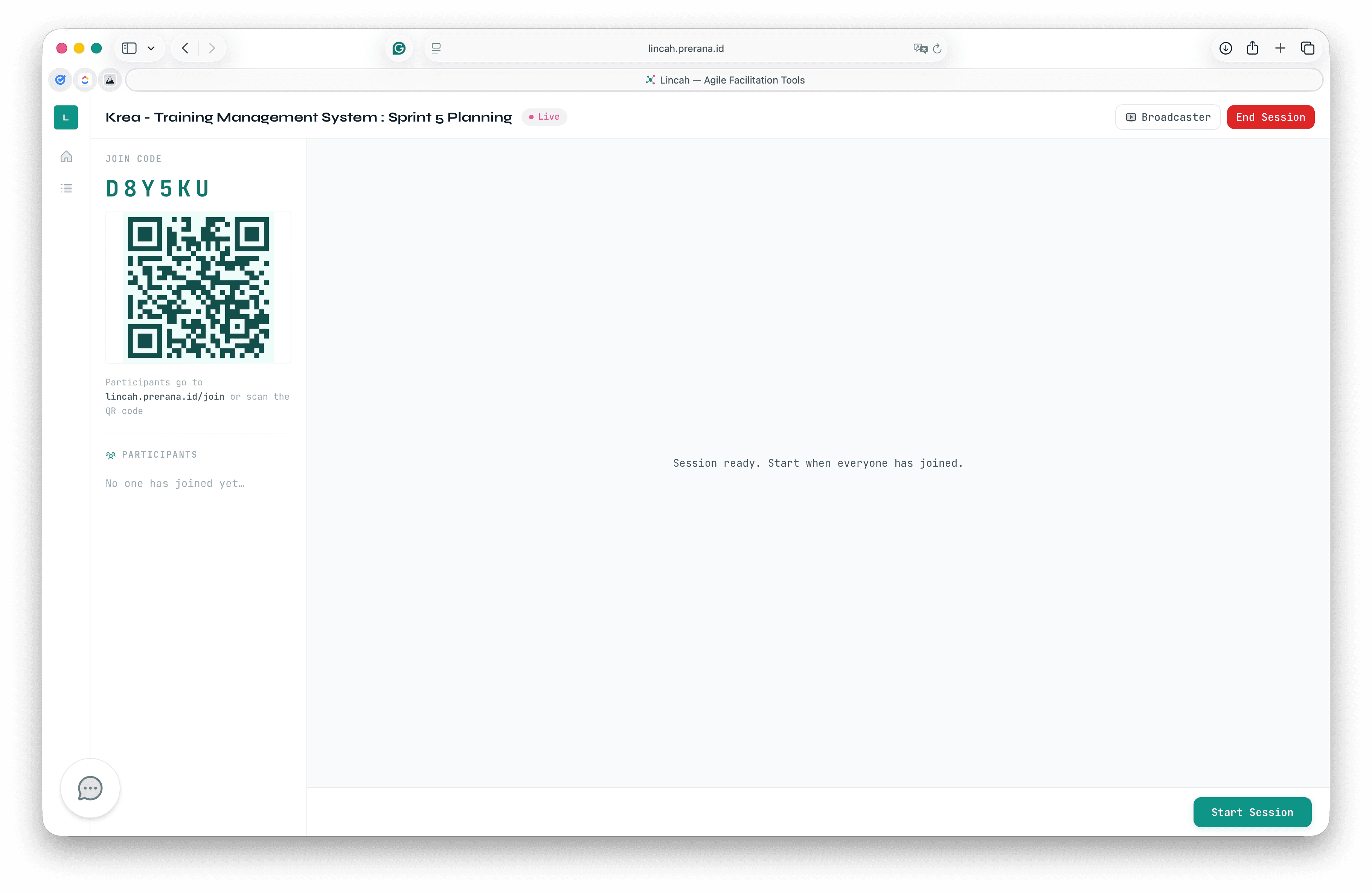
Facilitator
You hold the deck.
Queue the backlog, watch votes land in real time, and flip the cards the moment everyone is in.
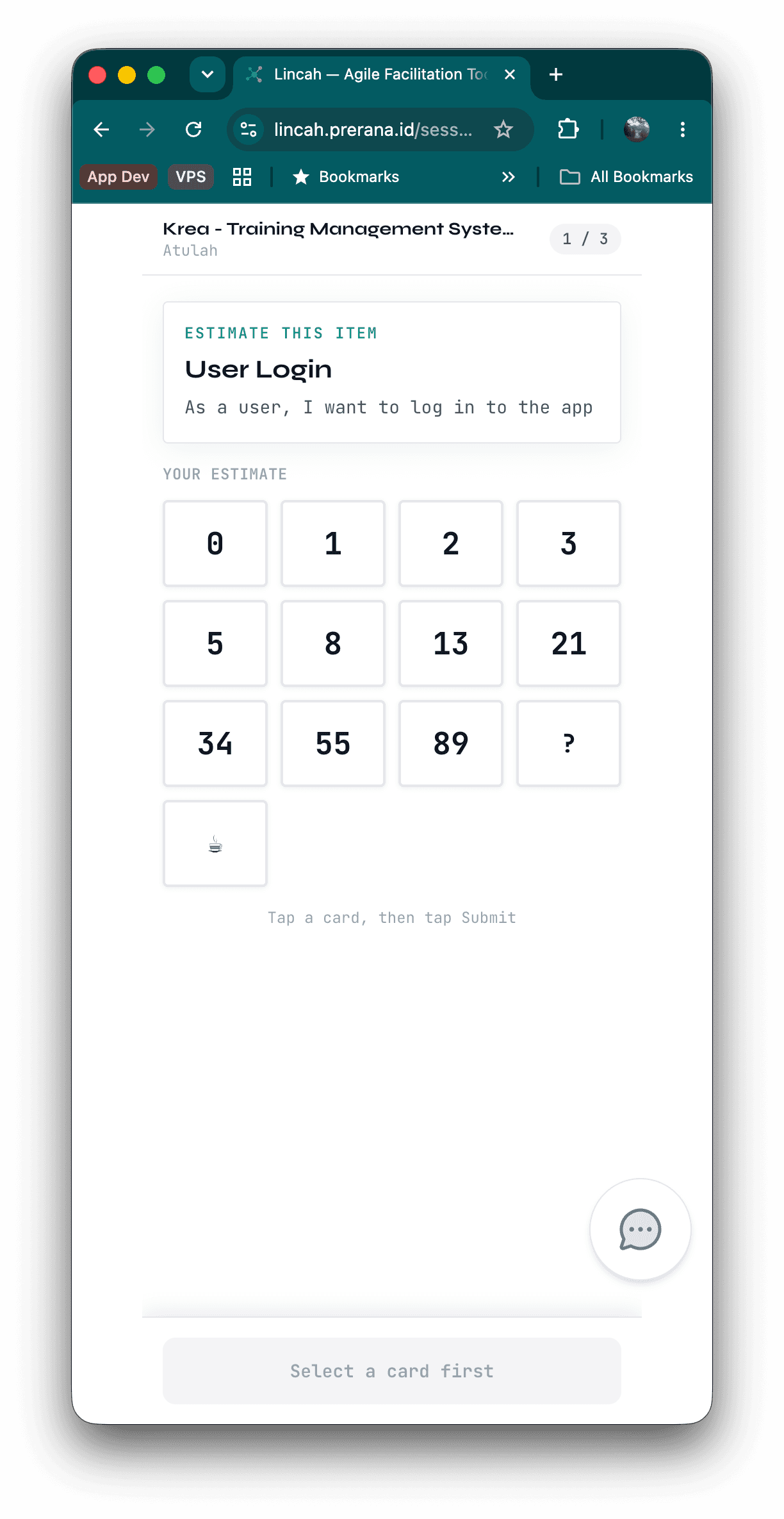
Participant
They just tap a card.
A display name and a 6-character code. No account, no install — it works on the phone already in their hand.
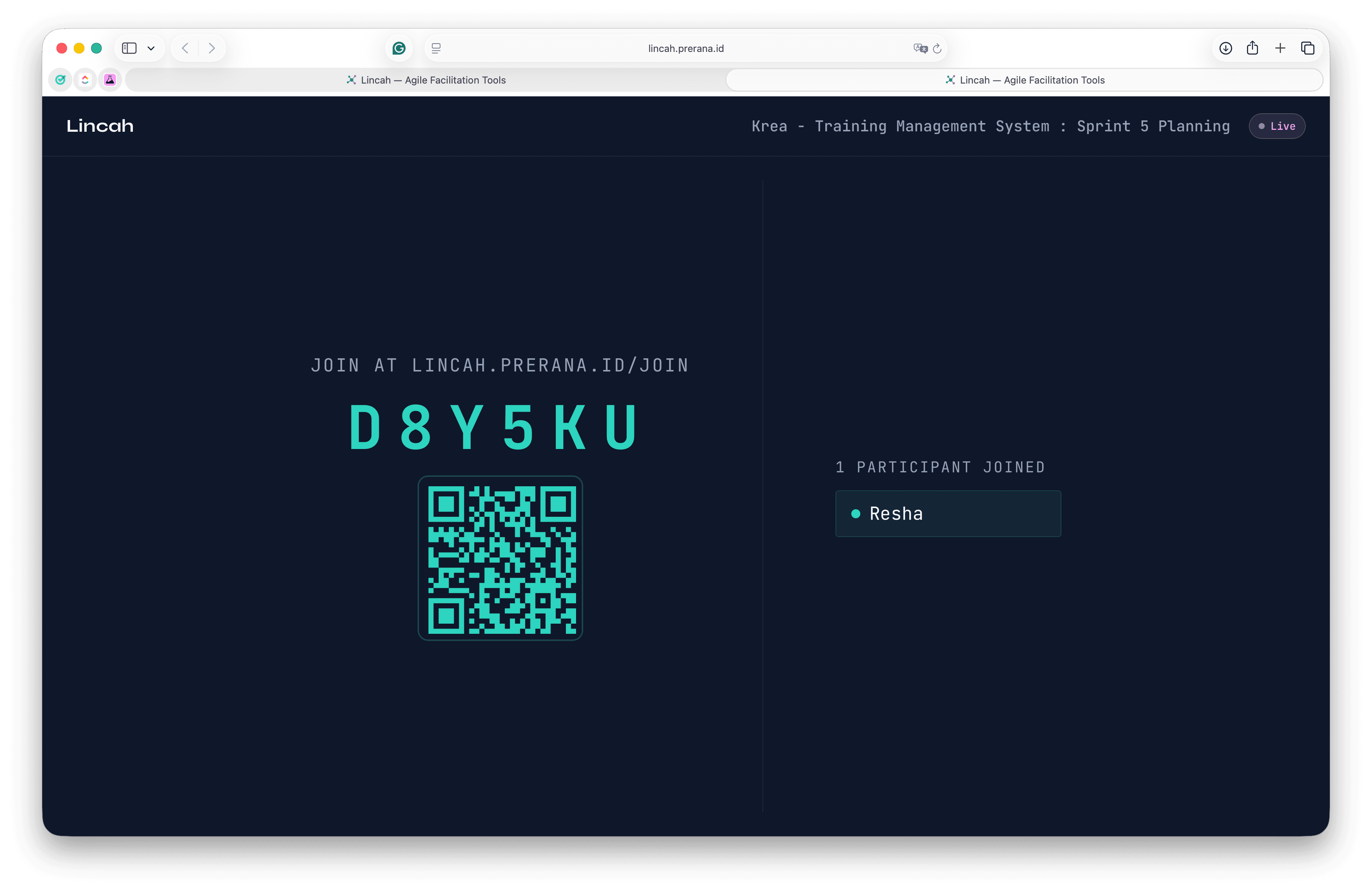
Broadcaster
The table, on the wall.
A read-only view built for the projector, so the flip happens in front of everyone at once.
The spec
When to deal it in.
- When
- Typically used during Sprint Planning or Backlog Refinement sessions.
- Who
- The entire development team, Scrum Master (facilitator), and Product Owner.
- Deck
- Valid estimates only — usually the Fibonacci sequence. The widening gaps mirror widening uncertainty.
- Exit condition
- Outliers explain, the team revotes. Repeat until consensus — or split the item.
- Joining
- Participants enter a display name and a 6-character code. No account, no install.
- Plans
- Free and Pro plans available.
Table talk
Field notes from facilitators.
The tool runs the mechanics. These four habits are what make the estimates worth keeping.
Calibrate before you estimate.
Start with a mid-complexity item to calibrate the team’s scale before tackling the rest of the backlog. Estimating your hardest story first poisons every number after it.
Interrogate both ends of the spread.
When there are outliers, ask both the highest and the lowest voter to explain their reasoning. The low estimate often holds the hidden simplification — the “oh, I assumed we already had that API” moment.
Two rounds, no consensus? Split the story.
If the team can’t converge after two rounds, the item is probably too large. Split it before re-estimating — arguing harder about a vague story never made it smaller.
The Product Owner keeps a poker face.
The Product Owner should never reveal their opinion before cards are flipped. One raised eyebrow at the word “thirteen” defeats the entire purpose of simultaneous reveal.
Deal the first hand.
Free and Pro plans. Your team joins with a display name and a 6-character code — nothing to install, no accounts for participants, and the reveal lands all at once.