
Tools · Retro Board
Write first.
Talk after everyone has.
Retro Board is the team's space to reflect on the sprint that just ended — what worked, what didn't, what to do differently. Lincah runs the ritual live in the browser: timed silent writing, a simultaneous reveal, grouping, dot-voting, and action items with an owner and a date attached.
Participants join with a display name and a 6-character code — no account required.
Three columns, silence first. The board fills up before anyone starts talking.
A retro run out loud
Dina · Scrum Master
Yusuf · Backend
Putri · Frontend
Mei · QA
The first flat answer gives everyone else permission to say nothing too.
Why it exists
Silence surfaces what a room stays quiet about.
A retro exists to foster a culture of continuous improvement, celebrate successes, and address process issues before they compound. That only works if the things said out loud are the things people actually think — not the safest version of it.
Writing in private first means the quiet engineer who noticed the staging outage nobody paged for gets it on the board — instead of nodding along to "nothing really" because the first two people said it.
The ritual
From blank columns to owned actions.
The mechanics are simple and strict — every step protects the reveal. Try a round on the board to the right; it behaves like the real thing.
- 01
Set the columns
"What went well", "What didn't go well", "Action items" — or your own. The board is empty until the team fills it.
- 02
Write in silence
Everyone types sticky notes on their own device, at the same time, for a fixed window. Nobody sees anyone else's notes yet.
- 03
Reveal together
The timer ends and every note appears at once — anonymous no longer, but nothing was shaped by what came before it.
- 04
Group the duplicates
Drag similar notes into clusters. Six people writing "standup ran long" becomes one loud signal instead of six quiet ones.
- 05
Vote on what matters
A handful of votes each, spent on the clusters worth the room's time — not everything gets discussed, and that's the point.
- 06
Leave with owners
Turn the top votes into action items — each with a name and a date attached, not a vague intention.
A scripted board — the real one syncs live across every device in the room.
In the room
Everyone gets a lobby first.
Before a single sticky note is written, the room settles into place — the facilitator sees who's joined, and the projector shows the same join code to latecomers.
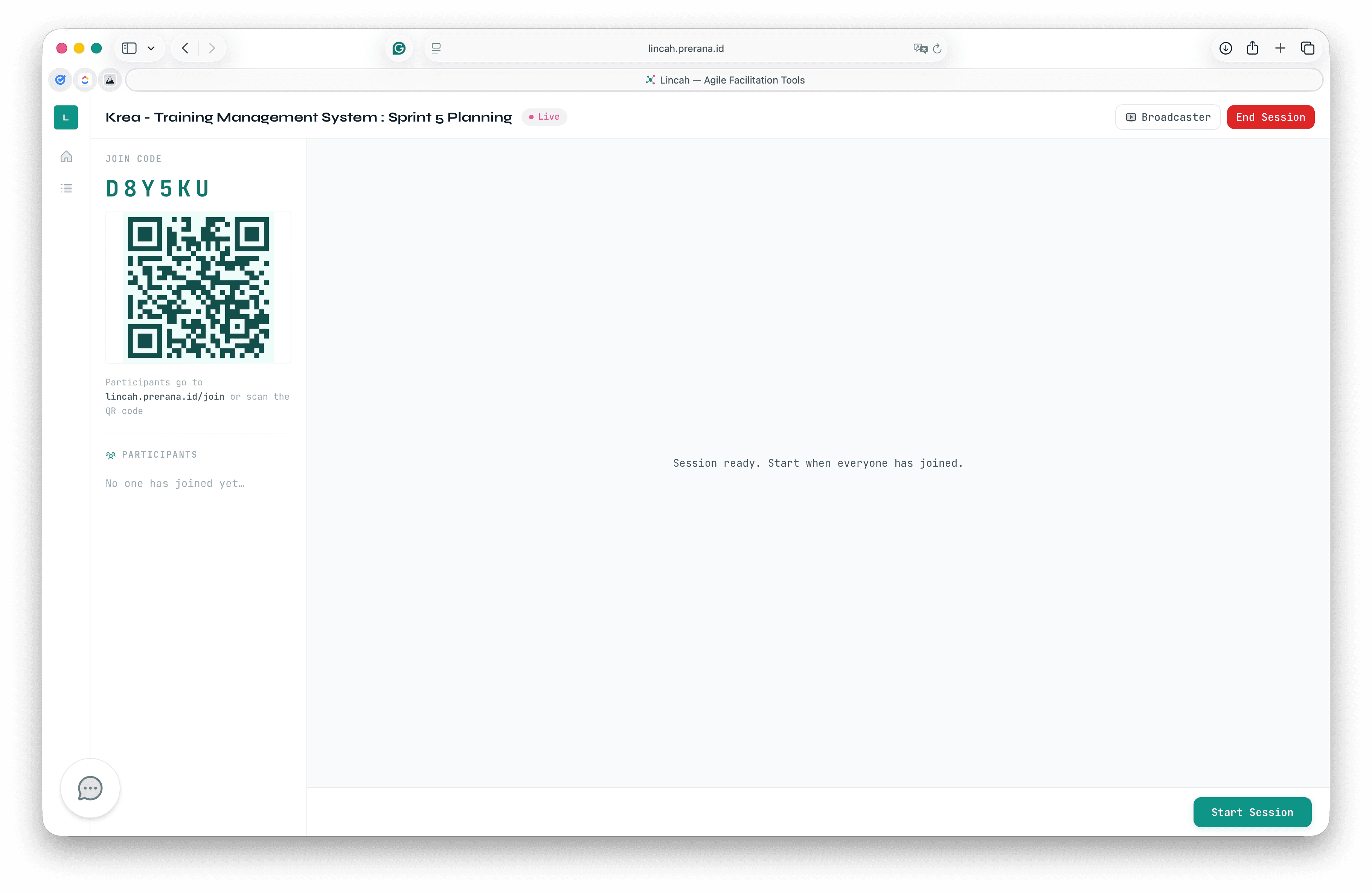
Facilitator
You set the columns, start the timer.
Watch the roster fill in, then start the silent writing window the moment the team is ready.
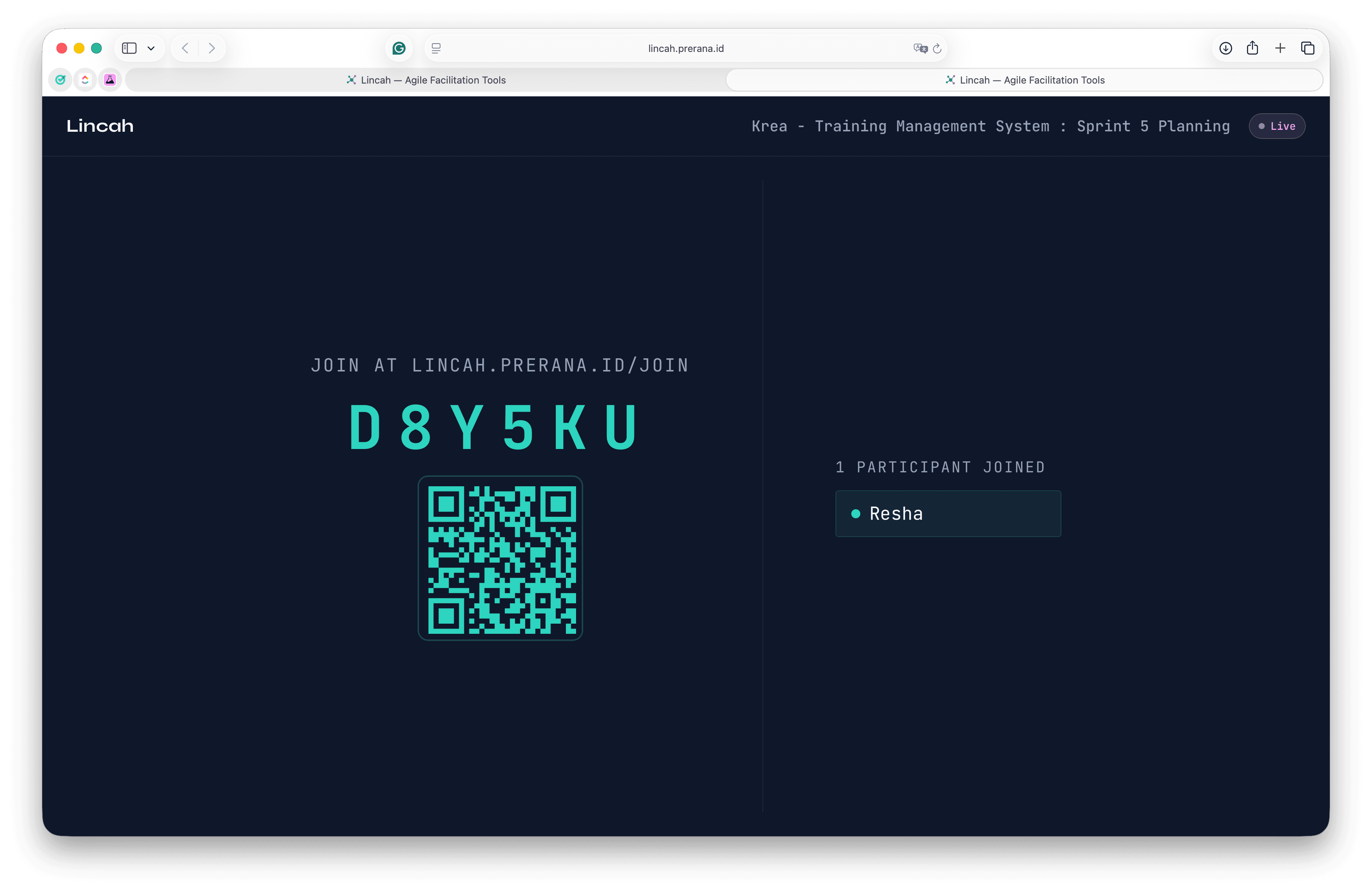
Broadcaster
The join code, on the wall.
A read-only view built for the projector — latecomers scan and join without interrupting the facilitator.
Participants join on whatever's in their hand — a display name and the 6-character code shown above is all it takes. No account, no install.
The spec
When to run it.
- What
- A dedicated space for the team to reflect on the past iteration and identify actionable improvements.
- Why
- To foster a culture of continuous improvement, celebrate successes, and address process issues before they compound.
- When
- At the end of every sprint or iteration.
- Who
- The entire Development Team, Scrum Master, and Product Owner.
- Joining
- Participants enter a display name and a 6-character code. No account, no install.
- Plans
- Free and Pro plans available.
Table talk
Field notes from facilitators.
The tool runs the mechanics. These four habits are what make the actions worth keeping.
Time-box the silence.
Cap the writing phase at 5–8 minutes. Open-ended brainstorming drags, and the first few notes start anchoring everyone else — even in a column nobody's supposed to be reading yet.
No talking while pens are moving.
Don't allow discussion while notes are being written — group and vote only after the reveal. Premature discussion collapses independent thinking into groupthink before the board has anything real on it.
Open with last sprint's actions.
Review the action items from the previous retro first. If last sprint's actions were never followed up, address that before adding new ones — a retro that never checks its own homework stops being trusted.
Two actions, not ten.
End with no more than two concrete actions, each with a named owner and a due date. "We should improve communication" is not an action item — it's a wish.
Start the timer.
Free and Pro plans. Your team joins with a display name and a 6-character code — nothing to install, no accounts for participants, and the board fills up before anyone speaks.